
The Last Pixel - Why Craftsmanship Still Defines the Human Experience
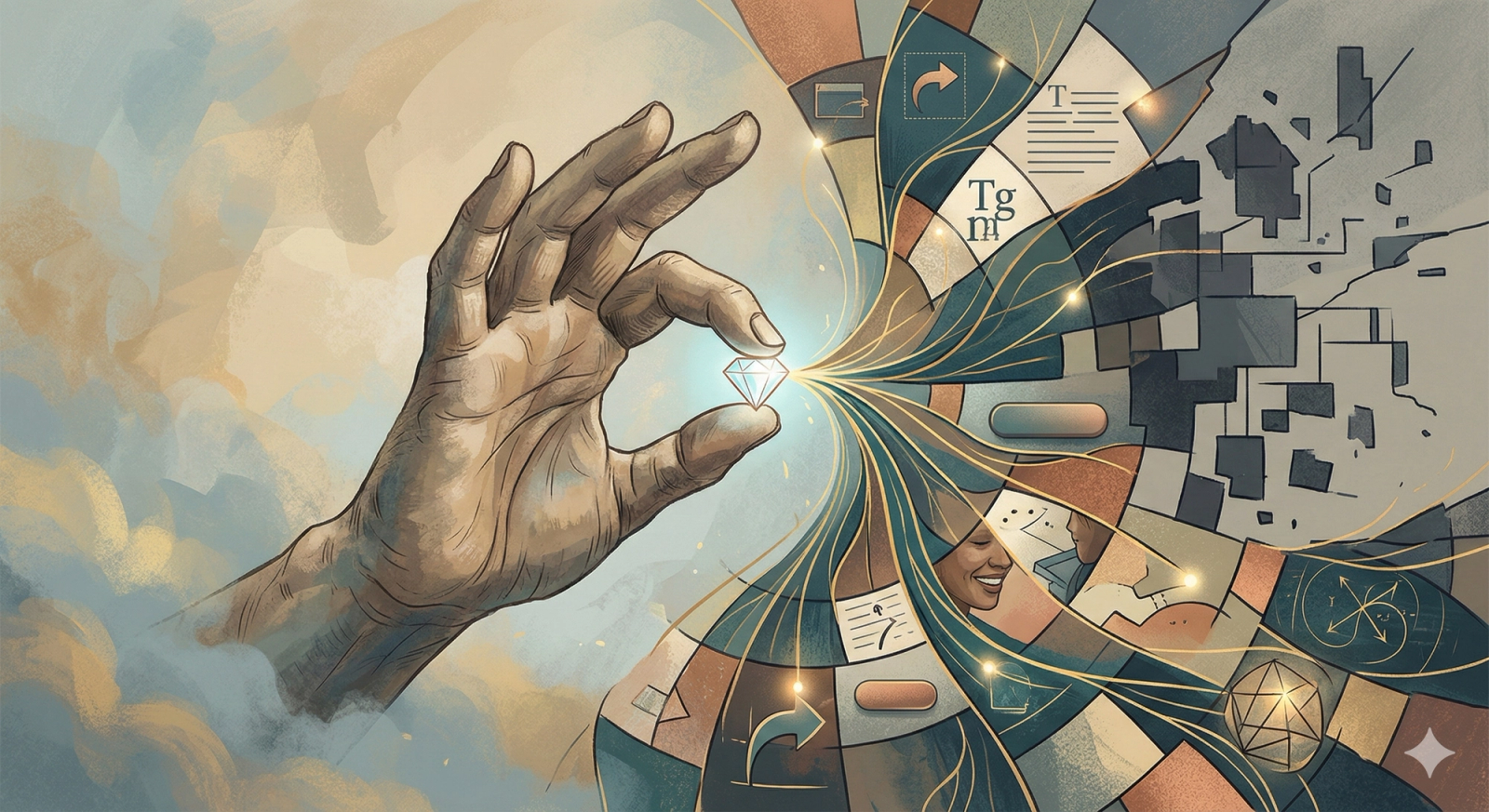
In the current landscape of design, we are witnessing a feat of unprecedented speed. Artificial intelligence can now "one-shot" a functional interface, a complex layout, or a vibrant illustration in a matter of seconds. To the casual observer, it seems the era of the meticulous designer—the one who agonizes over a four-pixel adjustment or the subtle curve of a corner radius—might be nearing its sunset.
However, the opposite is true. As the world becomes saturated with "good enough" designs generated by algorithms, the value of intentional, human-led craftsmanship has never been higher.
The Illusion of Completeness
AI is remarkably adept at mimicry. It can analyze millions of data points to produce something that looks right at a glance. But design is not merely a visual arrangement; it is a silent conversation between the creator and the user.
An AI "spit out" design often lacks the connective tissue of logic and empathy. It provides the what, but it rarely understands the why. It can generate a button, but it doesn't understand the physical relief a user feels when that button’s haptic feedback and micro-animation perfectly mirror the urgency of the task at hand. These are the "little details" that move a product from being a utility to being an experience.
The Emotional Resonance of the Detail
Details are the language of care. When a designer spends hours refining a transition or selecting a typeface that reflects a brand's specific heritage, they are signaling to the user: I was thinking of you.
- Emotional Light: A thoughtful margin or a perfectly weighted stroke doesn't just improve legibility; it creates a sense of calm. It respects the user’s cognitive load.
- Intellectual Clarity: Precision in data visualization or information hierarchy ensures that the user isn't just seeing information, but understanding it.
These nuances enlighten our emotions and thoughts. They create an invisible atmosphere of trust. When a user encounters a product where every detail has been considered, they feel safe within that environment. That sense of security cannot be automated because it stems from a human’s innate understanding of another human’s vulnerability.
The Firmness of Craftsmanship
To be a designer who cares about the "small things" is a polite but firm rebellion against the cult of efficiency. It is a statement that craftsmanship is not a luxury, but a fundamental requirement of quality.
Human craftsmanship is defined by intentionality. Every choice made by a designer—the decision to use white space to provide "breathing room," the subtle shift in color to indicate a change in state—is a deliberate act of service. AI can simulate the result, but it cannot replicate the intent.
The Future is Bespoke
As we move forward, the "one-shot" AI design will likely become the baseline—the commodity. But the baseline is not where the heart lives. The heart lives in the friction, the texture, and the deliberate imperfections that only a human eye can curate.
We must continue to advocate for the time it takes to be precise. We must remain firm in our belief that the last 5% of a project—the part where the soul is added through relentless refinement—is actually the most important 5%.
Details still matter. They are the evidence of our humanity, the proof of our labor, and the ultimate differentiator in a world of mirrors.